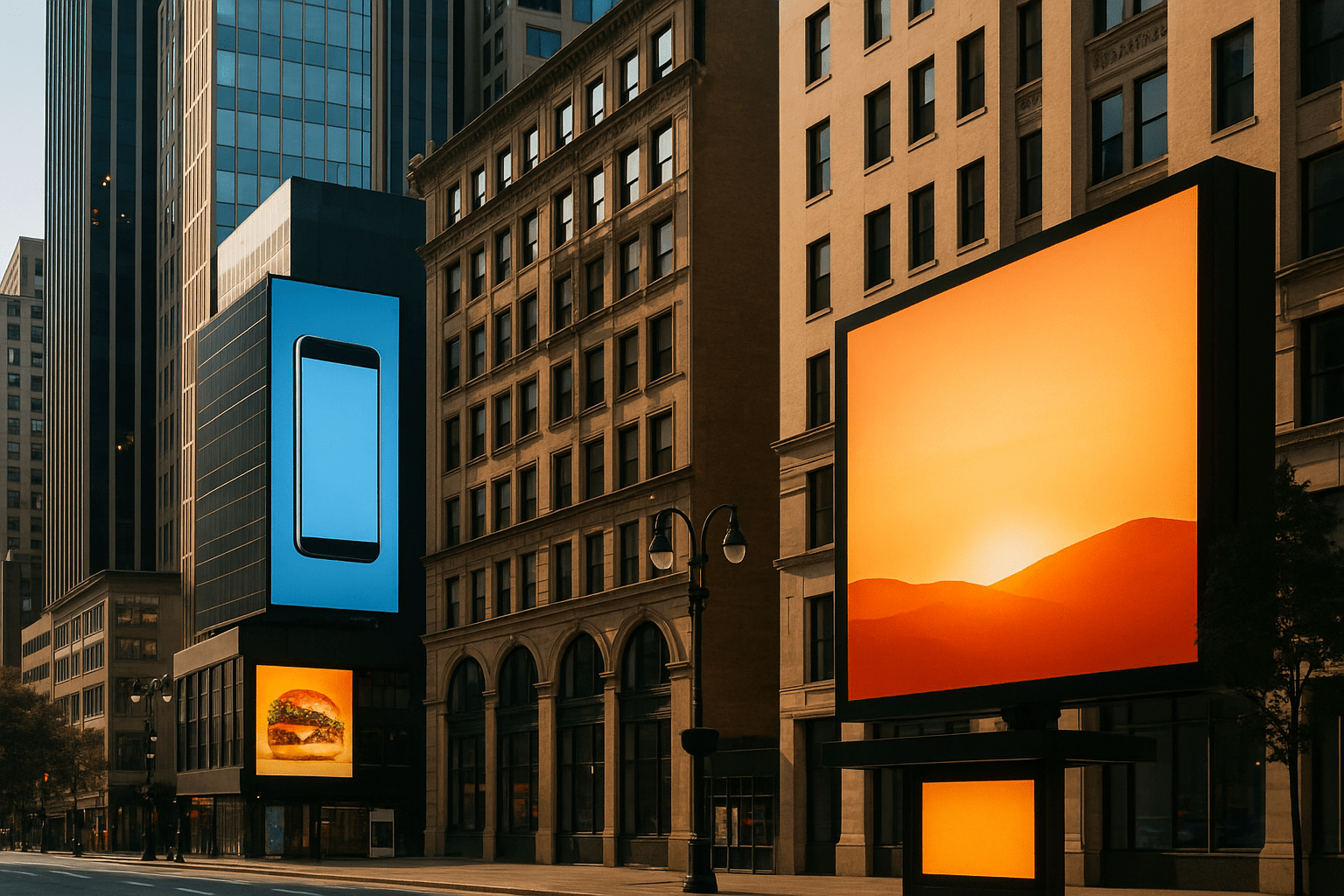
Outdoor advertising – or Out-of-Home (OOH) media – has always been about catching people’s eyes in transit. Billboards on highways, posters at bus stops, branded kiosks in airports. But in the USA today, this sector is quietly undergoing one of its biggest transformations in decades. While traditional digital marketing faces saturation, OOH is reclaiming space in marketing strategies, powered by technology, data, and shifting consumer behavior.
Why OOH Is Back in the Spotlight
For years, brands poured budgets into online campaigns, where targeting, measurement, and optimization seemed easier. But oversaturation, ad blockers, and declining trust in digital ads are making marketers rethink. OOH offers something different – visibility that cannot be skipped, scrolled, or blocked.
In 2024, the US OOH market grew steadily despite a challenging economic environment, reaching close to $9 billion in annual spend. Analysts project continued growth, driven by three main factors: the rise of digital billboards, data-driven targeting, and integration with mobile devices.
Year-by-Year Market Dynamics
Below is a snapshot of the US OOH advertising spend (all formats, including digital) over the past decade. Figures are rounded, based on industry reports.
| Year | Market Size (USD Billion) | Notes |
|---|---|---|
| 2015 | 7.3 | Post-recession recovery, traditional billboards still dominant |
| 2016 | 7.6 | Steady growth, early adoption of digital screens |
| 2017 | 7.9 | Mobile integration begins (QR, NFC pilots) |
| 2018 | 8.1 | Programmatic OOH platforms gain traction |
| 2019 | 8.6 | Peak before pandemic, DOOH double-digit growth |
| 2020 | 6.8 | COVID-19 impact, mobility restrictions |
| 2021 | 7.5 | Recovery as mobility returns |
| 2022 | 8.2 | Data-driven targeting expands |
| 2023 | 8.7 | DOOH accounts for ~30% of spend |
| 2024 | 9.0 | Sustainable formats, full integration with mobile |
| 2025* | 9.4 (forecast) | Programmatic expected to pass 40% share |
*Forecast based on industry projections (OAAA, PwC, Statista).
This trajectory highlights not only resilience during crises but also the structural shift toward digital and measurable formats.
Digital Billboards: Screens Instead of Paint
Digital Out-of-Home (DOOH) is the most visible trend reshaping US cities. High-resolution LED billboards now dominate major intersections from New York’s Times Square to Los Angeles’ Sunset Strip. Unlike static posters, DOOH allows for dynamic campaigns that can change by time of day, weather, or even live events.
For example, McDonald’s recently ran campaigns where coffee promotions appeared in the morning and burger ads in the afternoon – all on the same screen. This flexibility reduces printing costs and maximizes ad relevance.
Programmatic OOH: Data Meets the Street
Programmatic buying has arrived in OOH. Marketers can now book billboard slots the way they purchase online ads – in real time, with audience data. Platforms aggregate screens across the country, allowing advertisers to run targeted national campaigns with local relevance.
Imagine a campaign where a sportswear brand buys screen time only near gyms, stadiums, or during peak commuter hours. The precision once exclusive to online platforms is now coming to physical space.
Mobile and OOH: A Symbiotic Relationship
Smartphones extend the impact of outdoor ads. Studies show that 46% of US adults use their phone to search after seeing an OOH ad. QR codes, NFC, and geofenced push notifications are making this connection even more direct.
A simple example: a streaming service launches a billboard in Chicago. As passersby enter a defined geofence, they receive a trial offer notification. This “OOH-to-mobile” strategy transforms awareness into measurable engagement.
Sustainability Pressure and Green Advertising
Another trend reshaping the industry is sustainability. Traditional billboards use vinyl materials that generate waste. Today, advertisers face pressure to adopt eco-friendly alternatives: recyclable materials, solar-powered billboards, and energy-efficient LEDs. For brands positioning themselves as sustainable, the medium itself must align with their values.
Measuring Impact: From Guesswork to Analytics
Historically, one of OOH’s weaknesses was measurement. Today, data partnerships with mobile carriers, GPS providers, and analytics platforms are changing the game. Advertisers can now estimate impressions with greater accuracy, analyze traffic flow, and even correlate OOH exposure with store visits.
This accountability makes OOH more attractive for performance-driven marketers who once avoided it.
Challenges Ahead
Despite the growth, outdoor advertising faces challenges. The saturation of digital screens risks cluttering urban environments and reducing attention. Privacy concerns over location data could also limit the precision of programmatic OOH. Moreover, in smaller US cities, adoption of digital formats lags, leaving a gap between metropolitan innovation and regional reality.
The Takeaway for Businesses
For US brands – and for companies abroad looking to enter the American market – OOH is no longer just about big billboards on highways. It’s becoming a hybrid medium: part physical presence, part digital ecosystem.
When integrated into omnichannel strategies, OOH offers something rare in today’s fragmented media landscape: guaranteed visibility in the real world. In a time when attention is the most valuable currency, outdoor advertising in the USA is evolving into a measurable, dynamic, and surprisingly future-proof channel.
 Resonance Marketing